



 English
  中文简体
中文简体 
HOME / NEWS / Industry News / Polyester Swab vs. Foam Swab: Which Material Best Fits Your Cleanroom Requirements?
Content
- 1 1. Introduction: The Importance of Material Selection
- 2 2. Understanding Polyester Swabs
- 3 3. Exploring Foam Swabs
- 4 4. Comparison Table: Polyester vs. Foam
- 5 5. When to Choose Polyester Swabs
- 6 6. When to Choose Foam Swabs
- 7 7. The Role of the Shaft and Construction
- 8 8. Conclusion: Aligning with Your Process
- 9 FAQ
1. Introduction: The Importance of Material Selection
In the world of controlled environments, the smallest details often have the largest impact. For manufacturers in semiconductors, medical devices, pharmaceuticals, and precision optics, the choice of cleaning tools is not merely a supply chain decision; it is a critical process parameter. Among the tools used, cleanroom swabs are essential. However, the market is primarily divided into two major types: polyester swabs and foam swabs. Understanding the mechanical, chemical, and particle-generation characteristics of these materials is vital for maintaining product integrity and meeting regulatory standards.
2. Understanding Polyester Swabs
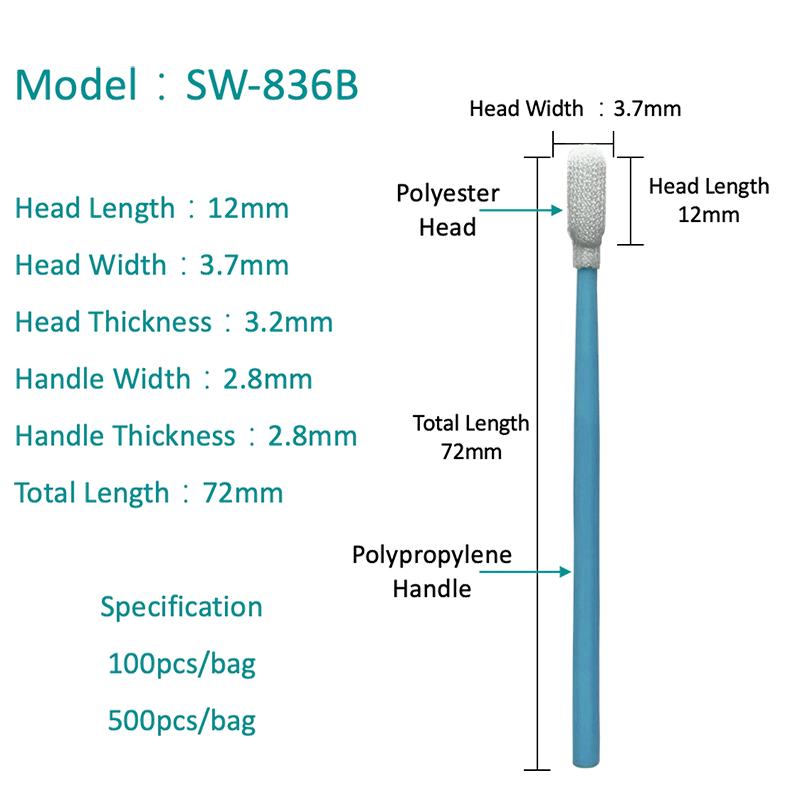
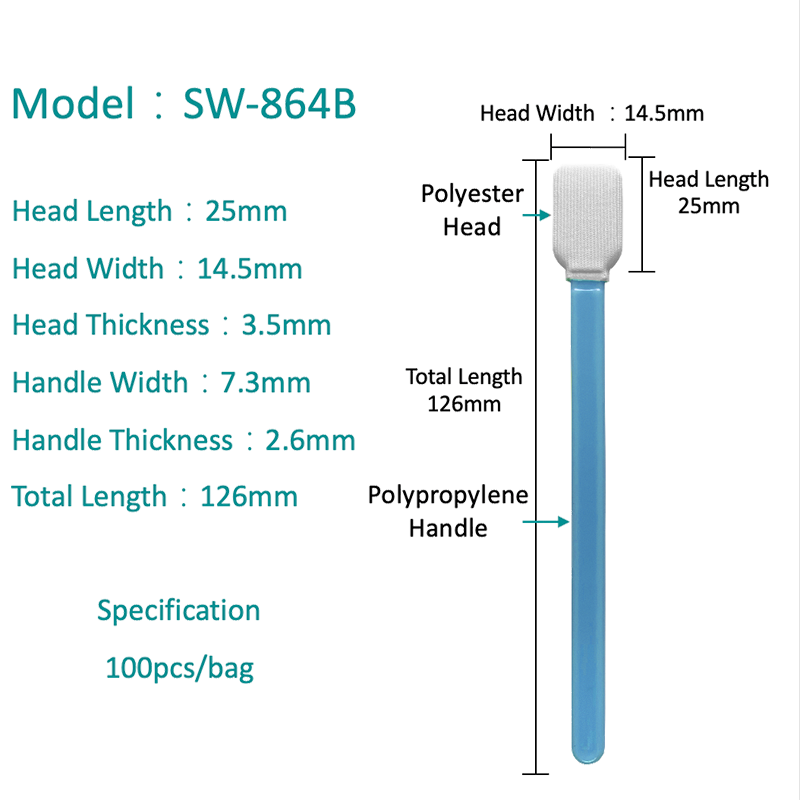
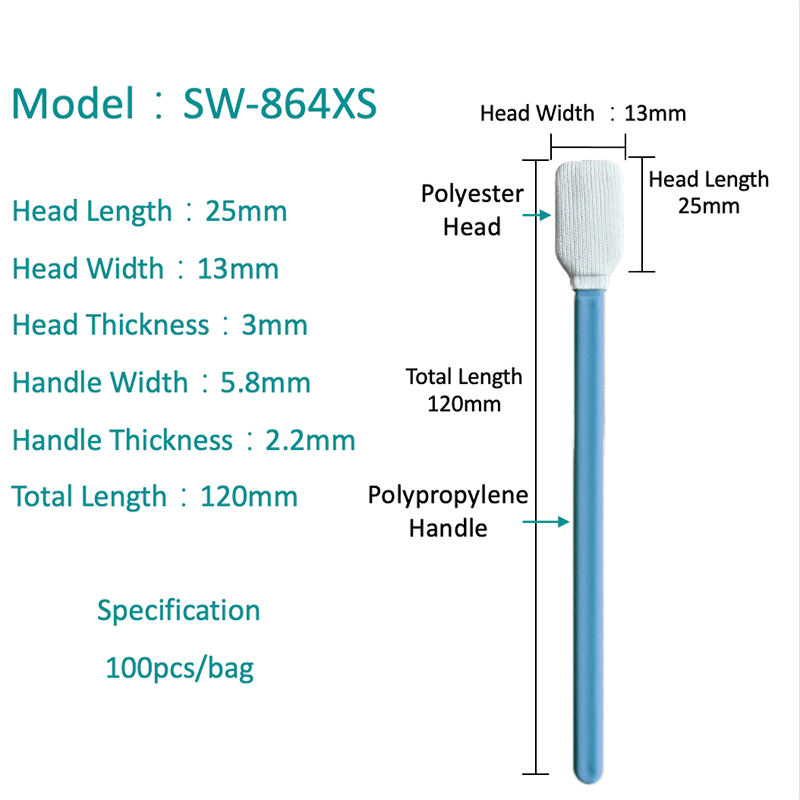
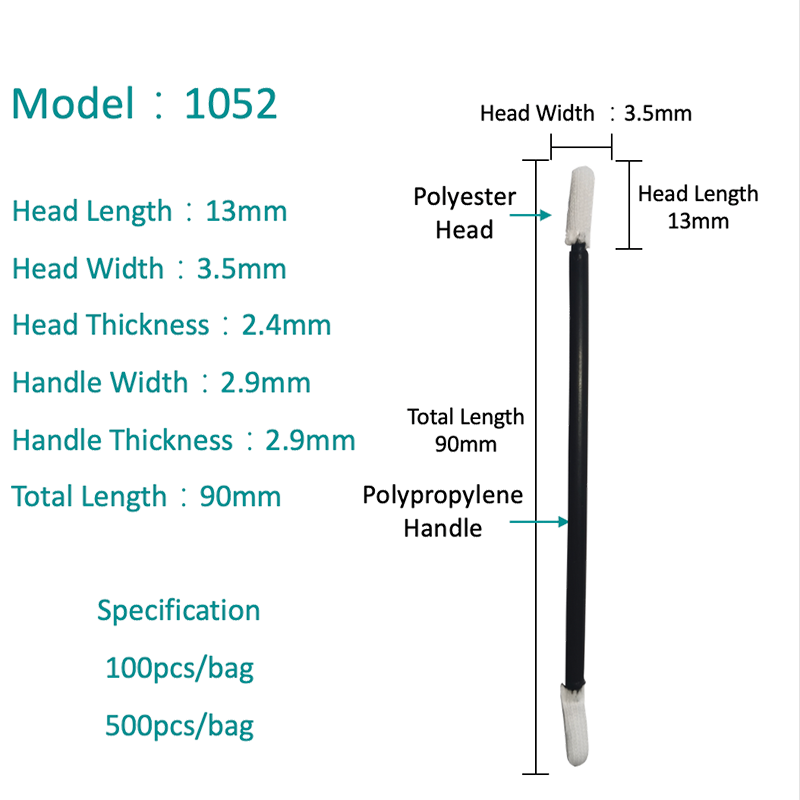
Polyester swabs are typically constructed from 100% synthetic, continuous-filament knitted polyester fabric. This material is inherently strong and chemically resistant. Because the fibers are continuous and the edges are usually thermally sealed or ultrasonically bonded, these swabs exhibit exceptionally low particle generation. They are engineered to be non-abrasive yet durable, making them the preferred choice for tasks that require scrubbing or heavy-duty solvent application without the risk of leaving behind fibers or residues.
3. Exploring Foam Swabs
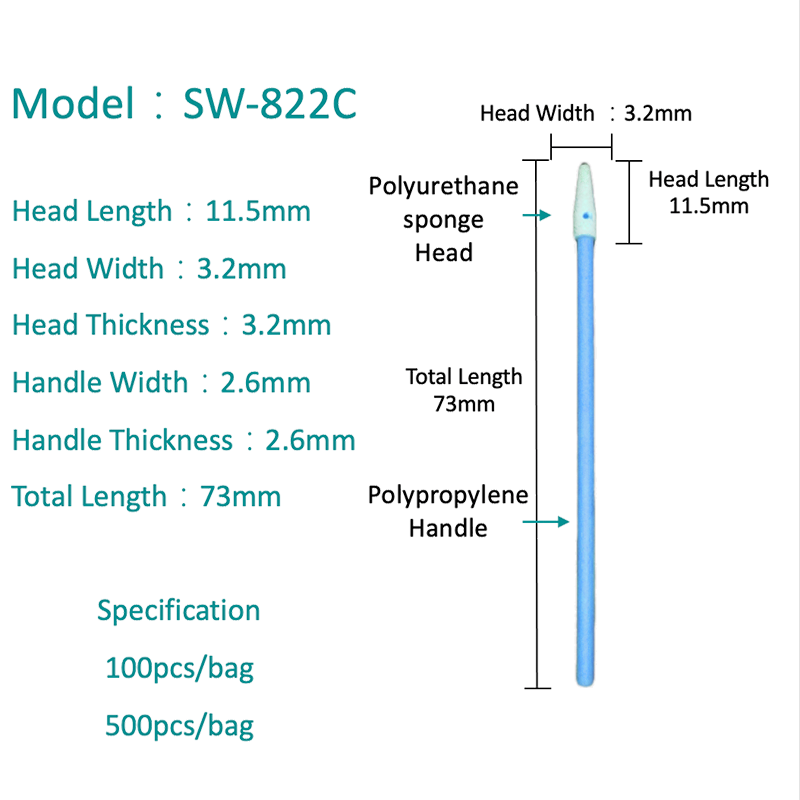
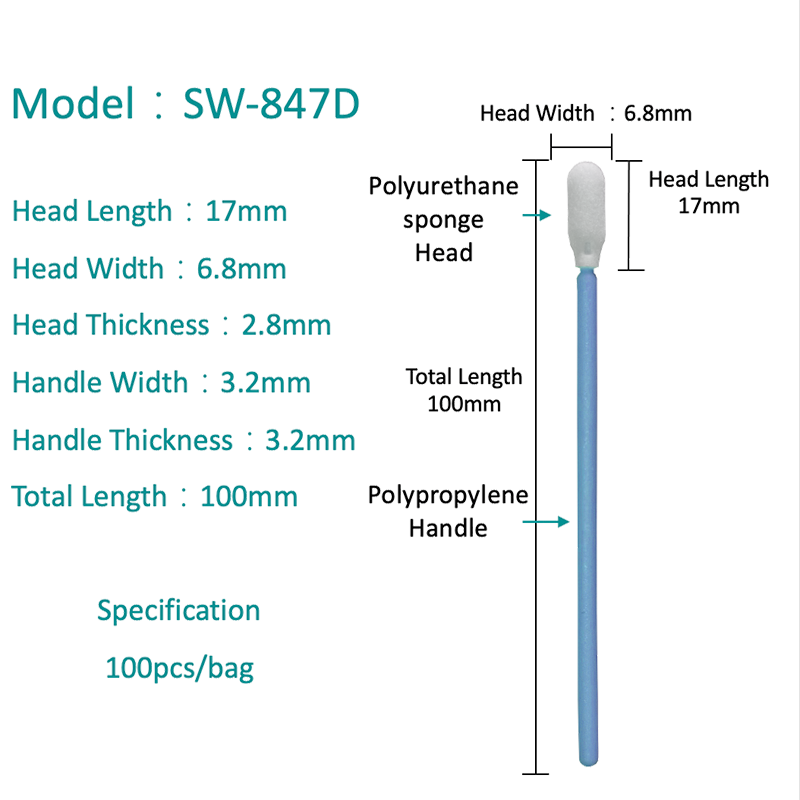
Foam swabs are crafted from open-cell polyurethane foam. The primary advantage of foam is its superior absorbency. The open-cell structure acts like a sponge, pulling in significant volumes of liquids quickly. This makes foam swabs ideal for applying cleaning solutions, absorbing excess flux, or wiping down flat surfaces. Foam is also incredibly soft and pliable, which allows the swab tip to conform to the irregular shapes and intricate geometries of mechanical components.
4. Comparison Table: Polyester vs. Foam
The following table summarizes the key performance differences between these two materials to assist in selection.
| Feature | Polyester Swab | Foam Swab |
|---|---|---|
| Absorbency | Moderate (Controlled delivery) | High (Volume holding) |
| Particle Generation | Ultra-Low (LINT-FREE) | Low (Dependent on foam density) |
| Abrasiveness | Firm/Slightly abrasive | Soft/Non-abrasive |
| Chemical Resistance | Excellent (Compatible with all) | Good (May swell in harsh solvents) |
| Surface Compliance | Rigid/Structure-holding | Conformable/Pliable |
| Primary Use Case | Precision critical cleaning | General wiping/solvent application |
5. When to Choose Polyester Swabs
Polyester is the gold standard for high-level cleanrooms (ISO Class 3-5). Its ability to remain stable in the presence of aggressive solvents—such as acetone or ketones—makes it indispensable. If your process involves cleaning sensitive optics, disk drives, or microscopic components where even a single strand of fiber could cause catastrophic failure, polyester is the only choice. Furthermore, the structural rigidity of the knit provides the “bite” needed to remove stubborn contaminants or oily residues that softer foam might simply smear.
6. When to Choose Foam Swabs
Foam is the workhorse of the ISO Class 6-8 environment. It is the cost-effective, high-efficiency solution for general cleaning, applying adhesives, or removing gross debris from larger surface areas. Because foam is soft and compressible, it is better suited for cleaning delicate, easily scratched surfaces where the slight stiffness of a polyester swab might cause micro-scratches. It is also the superior choice when the primary goal is to apply a large volume of solvent in a single pass.
7. The Role of the Shaft and Construction
While the tip material is the primary consideration, the shaft material also plays a role in cleanliness. Polypropylene shafts are standard in the industry because they are inherently clean, chemical-resistant, and can be made static-dissipative for ESD-sensitive environments. Always ensure that the bonding process between the tip and the shaft is adhesive-free (e.g., thermal bonding). Adhesives often contain organic contaminants that can leach out when exposed to solvents, potentially compromising your entire cleaning process.
8. Conclusion: Aligning with Your Process
The decision between polyester and foam is ultimately driven by your specific industry application. If your facility operates at the highest levels of purity and deals with complex, sensitive electronics, the investment in polyester swabs provides the necessary reliability and contamination control. Conversely, if your operation requires high-absorbency for rapid cleaning of non-critical components, foam swabs offer the best balance of efficiency and cost-effectiveness. By evaluating your specific cleaning requirements against the material properties discussed, you can standardize your consumables for optimal performance.
FAQ
- Q: Are polyester swabs safe for use on static-sensitive electronic components?
A: Yes, provided you select an ESD-safe version. Most professional-grade polyester swabs utilize static-dissipative polypropylene handles to prevent charge buildup. - Q: Why do my foam swabs disintegrate when I use them with certain solvents?
A: Polyurethane foam has varying levels of chemical resistance. Strong aggressive solvents like ketones or esters can cause the foam to swell or soften, leading to structural failure. In these cases, knitted polyester is a more chemically robust alternative. - Q: Can I reuse polyester swabs after cleaning them?
A: No. Cleanroom swabs are designed for single-use applications. Reusing a swab risks re-contaminating your critical surface with particles or residues captured during the first use. - Q: What does “ISO Class” mean in relation to swab selection?
A: ISO class refers to the cleanliness level of the environment based on particle counts. Lower classes (e.g., ISO 4) require materials that generate almost zero particles, necessitating high-quality, sealed-edge polyester swabs. - Q: How do I know if a swab is “lint-free”?
A: No material is 100% lint-free. However, knitted polyester is categorized as “low-linting” because the fibers are continuous filaments rather than short, staple fibers like those found in traditional cotton.

 ADDRESS
 CONTACT
 FAX
FAX EMAIL
EMAIL
