



 English
  中文简体
中文简体 
HOME / NEWS / Industry News / The Ultimate Guide to Microfiber Swabs: Types, Uses, and Selection for Critical Cleaning
In industries where a single speck of dust can lead to catastrophic failure, the tools used for cleaning are as vital as the manufacturing equipment itself. Among these, the microfiber swab stands out as a precision instrument, engineered to meet the exacting standards of cleanroom and high-tech environments. This guide delves deep into the world of microfiber swabs, exploring their applications, benefits, and how to select the perfect one for your specific needs. As a specialized manufacturer with cleanrooms up to Class 10, Suzhou Zhuojing Dust-free Technology Co., Ltd. is dedicated to producing high-purity consumables that protect sensitive processes in semiconductors, aerospace, pharmaceuticals, and beyond.
What is a Microfiber Swab?
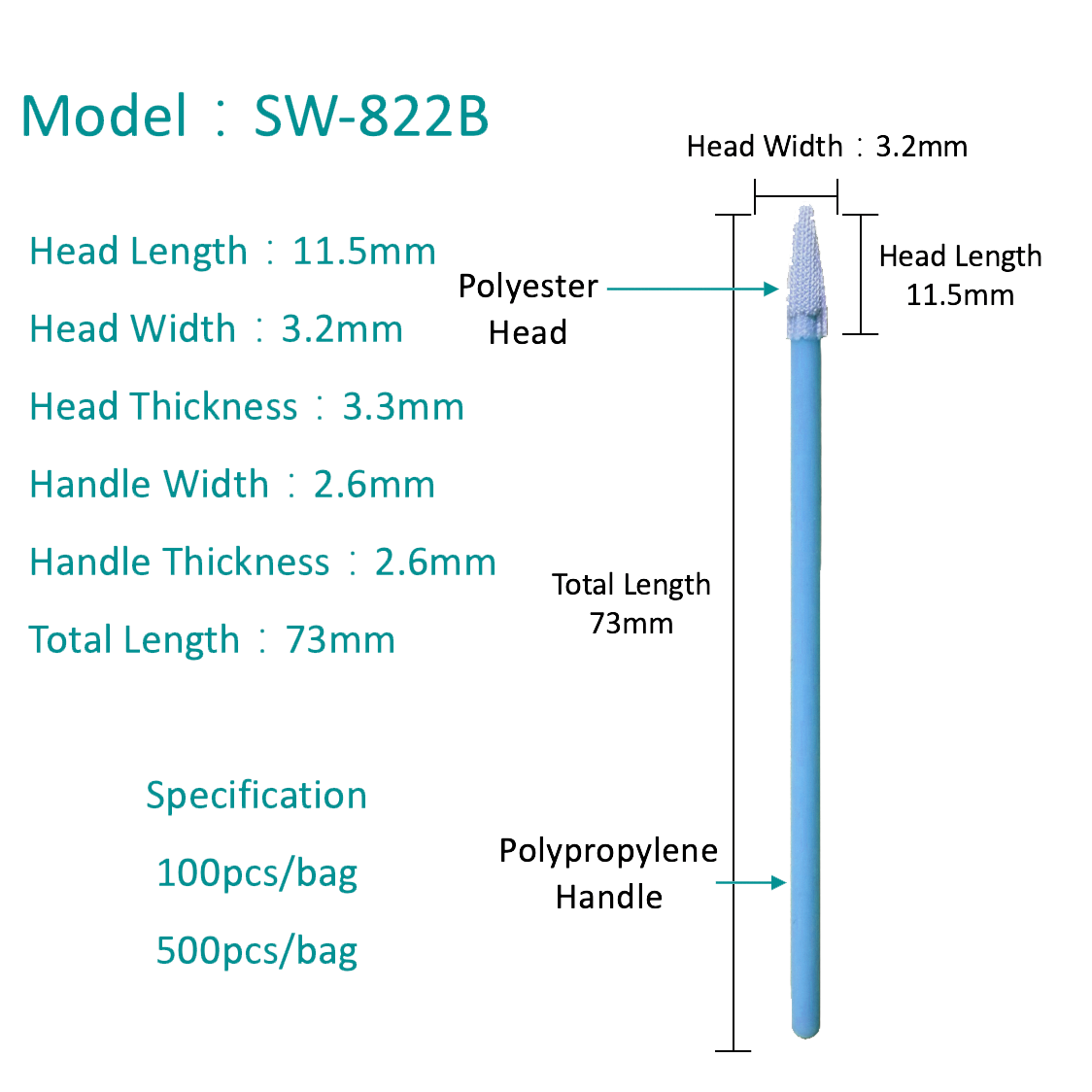
A microfiber swab is a cleaning tool featuring an absorbent, lint-free tip made from ultrafine synthetic fibers, typically polyester or a polyester/polyamide blend. These fibers are split to a diameter of less than 1 denier, creating a massive surface area ideal for trapping and holding microscopic contaminants, oils, and moisture. The tip is attached to a handle made of plastic, wood, or other materials suitable for the application.
Core Advantages Over Traditional Swabs
Unlike cotton swabs, which can shed fibers and leave residue, microfiber swabs offer superior cleanliness and control. Their exceptional performance stems from several key characteristics:
- Ultra-Low Lint and Particle Generation: The tightly woven or knitted structure minimizes fiber shedding, preventing secondary contamination.
- High Absorbency and Retention: The split-fiber structure acts like a sponge, effectively capturing and holding contaminants instead of spreading them.
- Chemical Compatibility: Microfiber is resistant to many solvents and chemicals used in precision cleaning.
- Non-Abrasive: The soft fibers ensure safe cleaning of delicate surfaces like optical lenses, semiconductor wafers, and medical devices.
5 Key Applications and Their Specific Swab Requirements
Understanding the specific use case is paramount to selecting the correct swab. Here’s a breakdown of major applications and their requirements.
1. Electronics and Semiconductor Manufacturing
This field demands the highest level of cleanliness to prevent circuit defects. Swabs used here must be ultra-pure, static-dissipative, and compatible with aggressive solvents like IPA.
- Critical Task: Cleaning photomasks, wafer handlers, and bonding pads.
- Swab Specs: Class 10 or better cleanroom manufacturing, sealed packaging, conductive or static-dissipative handles.
2. cleaning camera lenses with microfiber swabs
For photographers and optics professionals, a stray fiber or abrasive particle can scratch expensive lens coatings. This task requires a gentle yet effective tool.
- Critical Task: Removing dust, oil, and fingerprints from optical surfaces without leaving streaks or scratches.
- Swab Specs: Extremely fine, non-woven microfiber tips, often with a pointed design for tight spaces. Low particle count is essential.
3. microfiber swabs for laboratory use
Labs handling sensitive assays, DNA samples, or sensitive instrumentation need reliable, contaminant-free swabs to ensure result accuracy.
- Critical Task: Wiping down instrument surfaces, sampling, or applying precise amounts of solvent.
- Swab Specs: Sterilizable (often gamma-irradiated), low extractable levels, chemically inert materials.
4. precision cleaning with microfiber swabs
This is a broad category encompassing aerospace (gyroscopes, sensors), medical device assembly, and precision instrumentation. The focus is on achieving a contaminant-free surface for proper function or adhesion.
- Critical Task: Preparing surfaces for bonding, cleaning intricate mechanical parts, or maintenance of sensitive gauges.
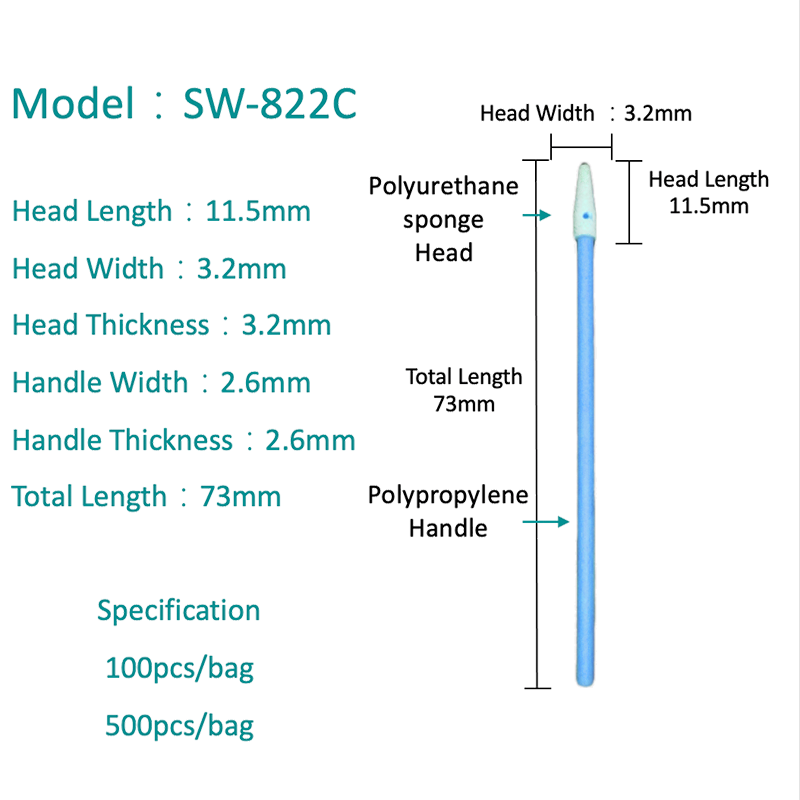
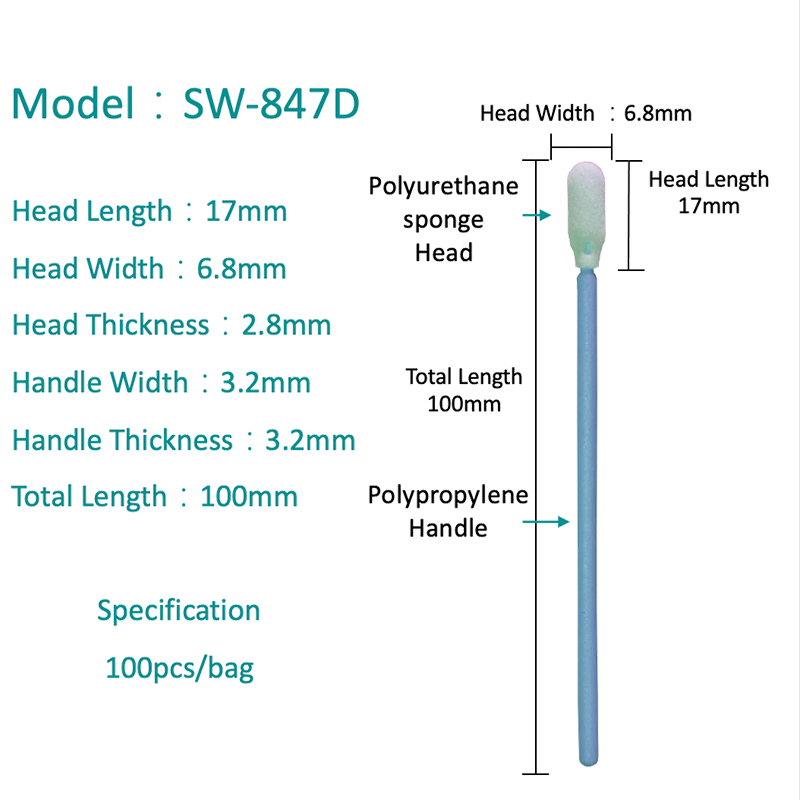
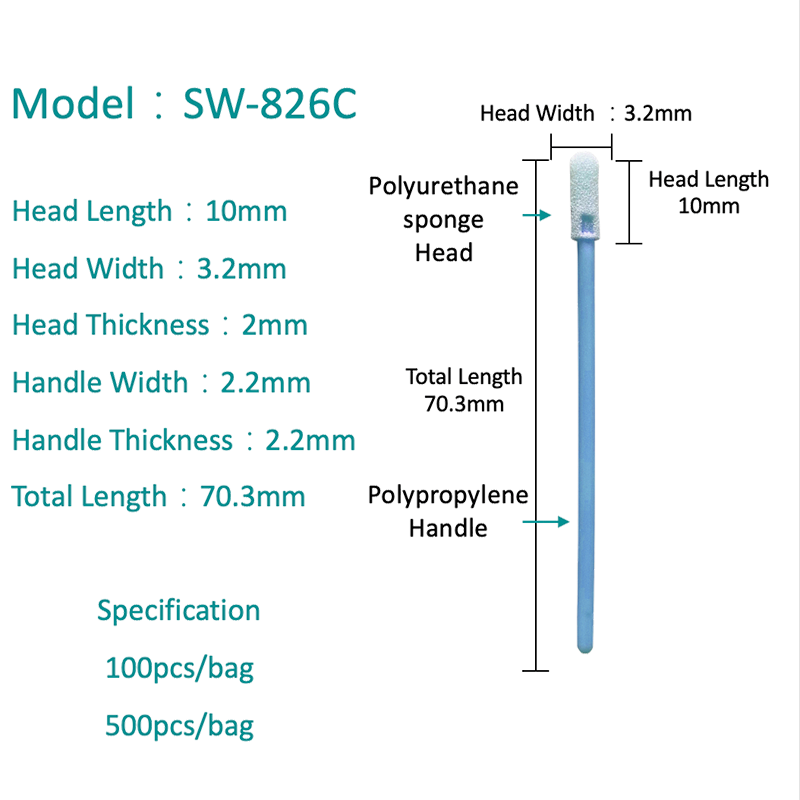
- Swab Specs: Variety of tip shapes (pointed, flat, pencil), high absorbency, and material compatibility with the contaminant (e.g., grease, adhesive).
5. microfiber swabs for medical device assembly
Assembling devices like implants, surgical tools, or diagnostic cartridges requires an aseptic environment. Swabs must not introduce bioburden or particulates.
- Critical Task: Final wipe-down before packaging, applying conductive gels, or cleaning fluid channels.
- Swab Specs: Manufactured in a controlled cleanroom environment, sterile packaging, and often validated for use in ISO Class 5-7 cleanrooms.
6. best microfiber swabs for electronics
This application zeroes in on the specific needs of PCB cleaning, connector maintenance, and hard drive repair, where static control is as crucial as cleanliness.
- Critical Task: Applying flux remover, cleaning edge connectors, or removing debris from sensitive components.
- Swab Specs: Static-dissipative or conductive handles to prevent ESD damage, solvent-resistant fibers, and low-mineral/acidic extractables to prevent electrochemical migration.
Choosing the Right Microfiber Swab: A Detailed Comparison
Selecting a swab involves evaluating multiple factors. The following comparison highlights the differences between key selection criteria.
Tip Material & Construction
The swab tip is its business end. Different constructions offer varying benefits for specific tasks. For instance, a knitted microfiber tip generally offers higher absorbency and durability for solvent cleaning, while a non-woven, melt-blown microfiber tip is often softer and lower-linting for optical surfaces [1].
| Type | Best For | Key Advantage | Consideration |
| Knitted Microfiber | General solvent cleaning, high absorbency tasks | Durable, excellent liquid retention, good scrubbing ability | May have slightly higher linting than non-woven |
| Non-Woven Microfiber | Optics, delicate surfaces, final precision cleaning | Extremely low linting, ultra-soft, often lower particle count | May have lower solvent capacity than knitted |
| Bonded Microfiber | Applications requiring a firm tip for light abrasion | Maintains shape under pressure, good for dislodging particles | Less absorbent than knitted varieties |
Handle Material and Properties
The handle provides control and can be critical for safety. A polypropylene handle is a cost-effective, chemically resistant option for general use, whereas a carbon-filled conductive plastic handle is essential for working on static-sensitive electronics to safely dissipate charge [2].
| Material | Static Property | Key Advantage | Typical Use |
| Polypropylene | Insulative | Cost-effective, chemically resistant | General cleaning, non-ESD environments |
| Conductive Plastic (e.g., Carbon-filled) | Conductive (< 1 x 10^4 ohms) | Prevents ESD damage to components | Electronics assembly, hard disk drive manufacturing |
| Static-Dissipative Plastic | Dissipative (1 x 10^6 - 1 x 10^9 ohms) | Slows charge dissipation safely | Cleanroom environments, sensitive instrument cleaning |
| Wood or Paper | Insulative | Biodegradable, low cost | Low-precision tasks, arts, or non-critical applications |
Cleanroom Classification and Packaging
The environment in which a swab is manufactured and packaged directly impacts its cleanliness. Swabs packaged in bulk bags may be suitable for workshop use, but for cleanroom applications, swabs must be manufactured, cleaned, and packaged in a controlled environment. Swabs from Suzhou Zhuojing Dust-free Technology Co., Ltd., for example, are produced in Class 10 to Class 1000 cleanrooms, cleaned with 18.2 MΩ·cm ultrapure water, and individually vacuum-sealed to ensure particulate and ionic contamination is minimized before they reach the customer's process [3].
Best Practices for Using Microfiber Swabs
To achieve optimal results and avoid introducing contamination, follow these guidelines:
- Inspect Before Use: Check the swab tip for any visible defects or loose fibers.
- Use the Correct Solvent: Apply an appropriate solvent to the swab tip. Avoid soaking the swab, as excess liquid can drip or wick into the handle.
- Employ a Wiping Technique: Use a rolling or folding motion, turning the swab to always present a clean surface. Never drag a dirty swab tip back across a cleaned area.
- One Swab, One Task: Do not reuse a swab for multiple areas or contaminants. Discard it after a single pass or use.
- Follow Cleanroom Protocols: In controlled environments, always wipe in one direction, from the cleanest area towards the dirtier area, and follow proper gowning and material introduction procedures.
Why Manufacturing Integrity Matters: The Zhuojing Commitment
The performance of a microfiber swab is intrinsically linked to how it is made. At Suzhou Zhuojing Dust-free Technology Co., Ltd., our philosophy is rooted in scientific management and quality-oriented continuous improvement. Our dedicated engineering team focuses on the entire product lifecycle—from material selection to final packaging—to ensure every swab meets the highest standards.
- Controlled Production Environment: Our state-of-the-art cleanrooms (Class 10 to Class 1000) provide the foundational control necessary for producing true low-lint, low-particle consumables.
- Advanced Cleaning Process: Utilizing 18.2 MΩ·cm ultrapure water in specialized cleaning and drying processes removes particulates and ionic contaminants that could interfere with sensitive processes.
- Sealed for Purity: Immediate vacuum-sealing after production locks in cleanliness, preventing recontamination during storage and transport.
- OEM Expertise: We collaborate with international partners, offering OEM services that allow us to tailor swab design, material, and packaging to unique application challenges, whether for microfiber swabs for medical device assembly or the best microfiber swabs for electronics.
By integrating honesty, responsibility, and innovation into our business, we provide more than just a product; we deliver a critical component of our customers' quality assurance and process reliability.
Frequently Asked Questions (FAQ)
1. Can microfiber swabs be sterilized for medical or laboratory use?
Yes, many microfiber swabs are designed to be sterilized. Gamma irradiation is a common and effective method that sterilizes the swab without compromising the material's integrity or leaving residue. Always check the manufacturer's specifications to confirm the recommended sterilization method and validate the process for your application.
2. What is the difference between conductive and static-dissipative swab handles?
Conductive handles (surface resistance < 1 x 10^4 ohms) quickly ground a static charge, ideal for highly sensitive components. Static-dissipative handles (1 x 10^6 - 1 x 10^9 ohms) slow down the rate of charge discharge, providing a safer, controlled dissipation that is often preferred in cleanrooms to prevent sudden discharges that could generate particles [2].
3. How should I store opened packages of cleanroom-grade microfiber swabs?
Opened packages should be resealed immediately in their original packaging if possible, or transferred to a clean, sealed container. They should be stored in a low-humidity, clean environment to prevent absorption of atmospheric contaminants or moisture. For the highest level of assurance, use individually packaged swabs.
4. Are microfiber swabs suitable for use with acetone?
Polyester-based microfiber is generally resistant to acetone. However, prolonged exposure to strong solvents can degrade any plastic material over time. It is best to use the swab briefly for application and disposal, and to consult the manufacturer's chemical compatibility chart. Always ensure the handle material is also compatible with the solvent being used.
5. Why are some microfiber swabs more expensive than others?
The cost reflects the level of control and quality assurance. Factors include: the cleanroom class of manufacture, the purity of materials and washing water, the complexity of the swab design (e.g., custom shapes, specialized handles), the level of testing and certification (e.g., particle count, ionic extractables), and the packaging. For critical applications, the higher cost mitigates the immense risk of product failure or contamination.
Selecting the right microfiber swab is a critical decision that impacts product yield, quality, and reliability in high-tech industries. From cleaning camera lenses with microfiber swabs to the rigorous demands of microfiber swabs for medical device assembly, understanding the nuances of tip material, handle properties, and manufacturing origin is key. By partnering with a dedicated manufacturer like Suzhou Zhuojing Dust-free Technology Co., Ltd., you gain access to expertise, controlled production, and a commitment to quality that ensures your precision cleaning processes are built on a foundation of cleanliness and reliability.
References
[1] Microfiber Fabric Structures and Their Cleaning Efficacy. Journal of the IEST, 45(1), 45-50. (Illustrates differences in absorbency and linting between knitted and non-woven structures).
[2] ESD Association, Adv. #20.20. "ESD Handbook”. (Provides standard definitions and test methods for conductive and dissipative materials).
[3] Cleanroom Consumables: The Impact of Manufacturing and Packaging on End-User Contamination. Controlled Environments Magazine. (Discusses the correlation between cleanroom class, washing processes, and final product particulate levels).

 ADDRESS
 CONTACT
 FAX
FAX EMAIL
EMAIL
