



 English
  中文简体
中文简体 
HOME / NEWS / Industry News / The Ultimate Guide to Cleaning Swabs: Types, Applications, and Selection
In the world of precision manufacturing, laboratory science, and critical cleaning, the importance of using the right tools cannot be overstated. Among these, the humble cleaning swab plays a pivotal role. A specialized cleaning swab is engineered to meet stringent cleanliness standards, ensuring effective contamination removal without leaving residue or generating static. This guide delves deep into the specifics of industrial-grade cleaning swabs, helping professionals across sectors make informed decisions for their critical applications.
Understanding Industrial Cleaning Swabs
Industrial cleaning swabs are far removed from their common cotton counterparts. They are precision instruments designed for controlled environments. At Suzhou Zhuojing Dust-free Technology Co., Ltd., our expertise lies in manufacturing these essential consumables within state-of-the-art cleanrooms. We understand that the effectiveness of a swab is determined by its material composition, design, and the environment in which it is produced and packaged.
Core Components of a High-Performance Swab
Swab Tip Material
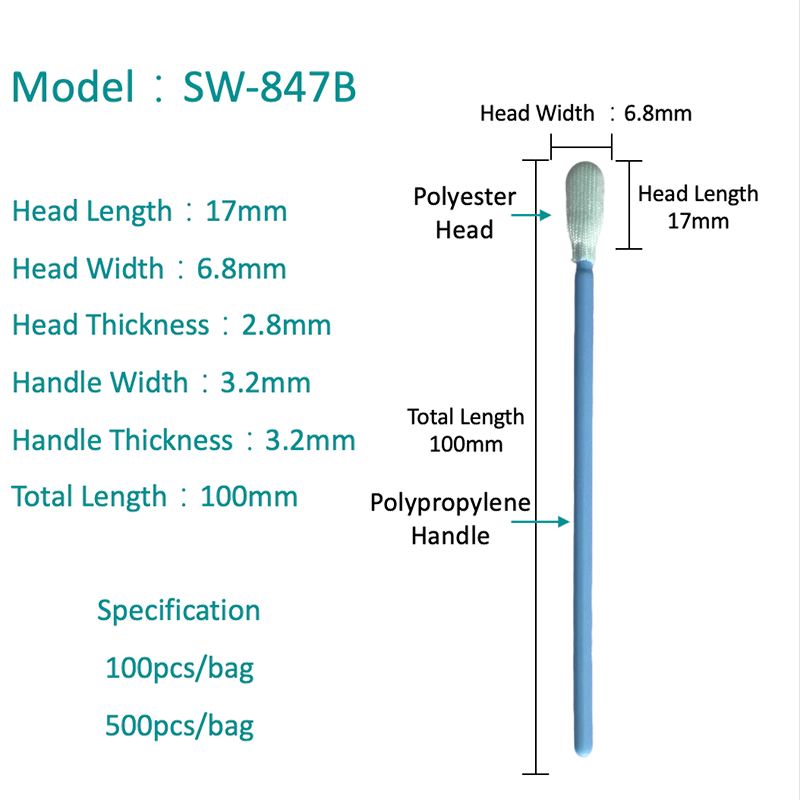
- Polyester (PES): Offers excellent chemical resistance and low particle generation.
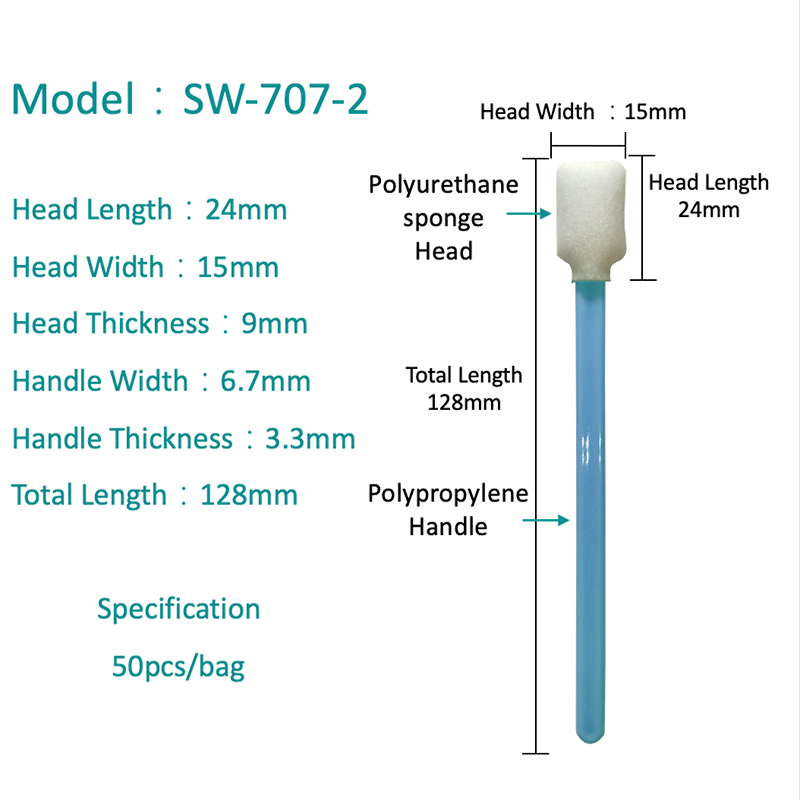
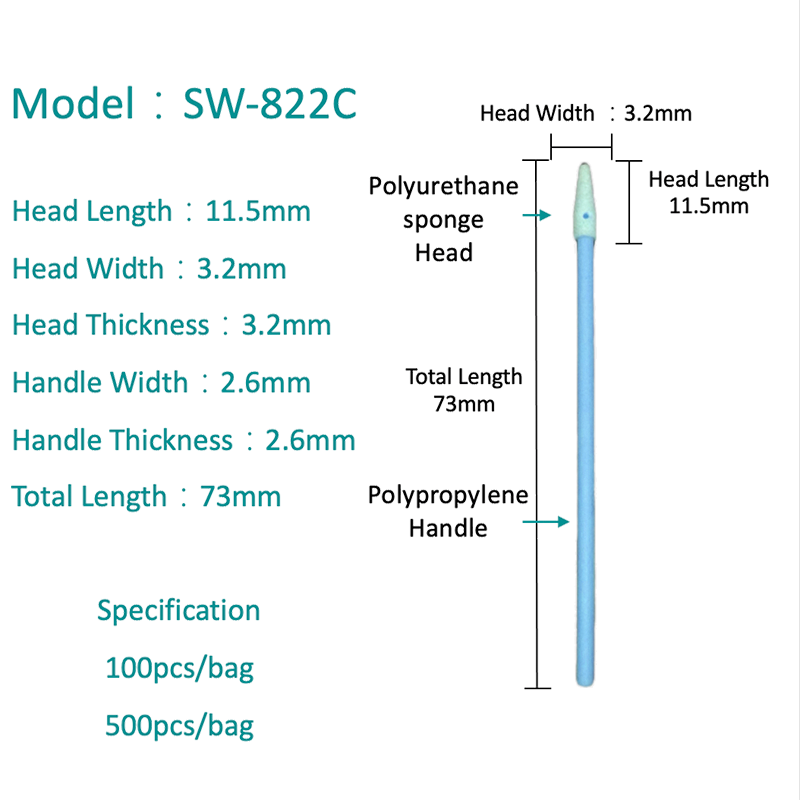
- Polyurethane (PU): Highly absorbent and soft, ideal for delicate surfaces.
- Cellulose: A natural fiber offering good absorbency at a lower cost.
- Polypropylene (PP): Inert, low-linting, and suitable for solvent-based cleaning.
Swab Handle Material
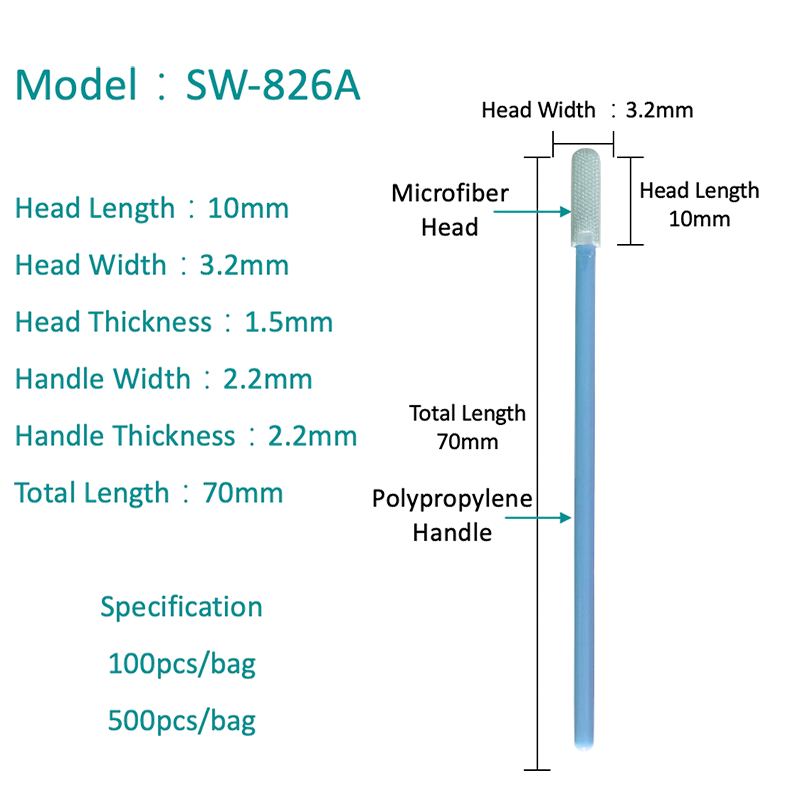
- PP (Polypropylene): Rigid, chemically resistant, and common for industrial use.
- Wood or Paper: Used in specific applications but can introduce fibers.
- Polyester: Flexible and often used for mini-tips and intricate cleaning.
Why Cleanroom Manufacturing is Non-Negotiable
Our factory operates with cleanrooms from Class 10 to Class 1000, utilizing ultra-pure water (18 mega-ohm) and advanced cleaning processes. This ensures every swab is free from contaminants like particles, fibers, and ionic residues that could jeopardize sensitive processes in semiconductor or pharmaceutical production.
Key Applications for Specialized Cleaning Swabs
The choice of a swab is directly driven by its application. Using the wrong type can lead to costly damage or contamination.
Electronics and Semiconductor Manufacturing
This sector demands the highest level of precision. Swabs are used to remove flux residues, particles, and other contaminants from circuit boards, connectors, and wafer surfaces. The need for anti-static cleaning swabs for sensitive components is critical here. Static discharge can instantly destroy microelectronics, making ESD-safe handles and low-charging tip materials a mandatory feature. Compared to standard swabs, anti-static swabs are designed with conductive or dissipative materials that safely ground any static charge during the cleaning process.
Precision Optics and Aerospace
Scratches or film residues on lenses, sensors, or aerospace instrumentation are unacceptable. For cleaning swabs for precision optics and lenses, ultra-fine, non-abrasive tips made from materials like PU are essential. They must lift contaminants without scratching the surface. The difference between a standard swab and one for optics is stark: optics swabs have a much higher purity level, controlled tip density, and are packaged in particle-free environments to prevent pre-use contamination.
Medical Device and Pharmaceutical Production
In sterile environments, swabs must meet biocompatibility standards and often need to be sterile themselves. They are used for cleaning molds, assembly equipment, and applying disinfectants. A sterile cleaning swab for medical device assembly is typically gamma-irradiated or ETO sterilized after being packaged. Unlike non-sterile industrial swabs, these have validated sterility assurance levels (SAL) and are tracked with lot numbers for full traceability.
Laboratory and Diagnostic Equipment
From cleaning sample ports on analyzers to maintaining sensitive lab equipment, swabs must be chemically compatible and low-linting. The focus is on performance without introducing interference. Swabs designed for lab use often prioritize solvent resistance and minimal extractable levels to avoid affecting test results.
General Precision Maintenance
This broad category includes cleaning hard drives, robotic arms, and precision mechanical parts. The requirement for low-lint cleaning swabs for hard drives is a perfect example. Hard drives are exceptionally sensitive to microscopic debris. A low-lint swab, made from tightly knit polyester or polypropylene, minimizes fiber shedding compared to a cotton swab, which would deposit numerous fibers and potentially cause a head crash.
How to Choose the Right Cleaning Swab: A Detailed Comparison
Selecting a swab involves balancing several factors. The table below provides a clear comparison to guide your decision. It's important to note that for industrial cleaning swab material comparison, there is no universal "best" material; the optimal choice depends entirely on the specific task, surface, and contaminant.
| Selection Criteria | Key Considerations | Recommended Swab Type / Material |
|---|---|---|
| Surface Sensitivity | Is the surface easily scratched (e.g., coated lens, polished metal)? | Use soft, non-abrasive tips like Polyurethane (PU) or fine knitted polyester. |
| Chemical Compatibility | What solvent or cleaner will be used (e.g., IPA, acetone, water)? | Polyester and polypropylene offer broad chemical resistance. Check compatibility charts. |
| Contaminant Type | Is it particulate dust, adhesive residue, or ionic contamination? | Knitted tips trap particles; absorbent PU soaks up liquids; pure cellulose can be good for oils. |
| Cleanroom Class | What is the particle allowance in your environment (ISO Class)? | Choose swabs manufactured and packaged in a cleanroom class equal to or stricter than yours. |
| Static Sensitivity | Are you cleaning static-sensitive components like PCBs or chips? | Mandatory use of anti-static cleaning swabs for sensitive components with conductive handles. |
| Sterility Requirement | Is the application in aseptic processing or medical assembly? | Opt for pre-sterilized, individually packed sterile cleaning swab for medical device assembly. |
Best Practices for Using Cleaning Swabs Effectively
Even the best swab can cause issues if used incorrectly. Follow these guidelines to maximize performance and safety.
Proper Technique
- Always use a fresh swab for each cleaning pass to avoid re-depositing contaminants.
- Apply gentle pressure; let the solvent and swab tip do the work, not force.
- Use a rolling or wiping motion rather than a grinding action.
- For solvents, moisten the swab—do not soak it, as excess liquid can drip.
Storage and Handling
- Store unopened packages in a clean, dry environment.
- Once the vacuum-sealed package is opened, use swabs immediately or store in a controlled environment.
- Never touch the swab tip with bare hands to avoid skin oil contamination.
- Dispose of used swabs according to local regulations for chemical or biohazard waste.
Why Partner with a Specialized Manufacturer?
For mission-critical applications, off-the-shelf solutions are insufficient. Partnering with a dedicated manufacturer like Suzhou Zhuojing Dust-free Technology Co., Ltd. provides significant advantages.
- Customized Solutions: We offer OEM/ODM services to design swabs with specific head shapes, handle lengths, and material combinations for unique challenges.
- Quality Assurance: Our integrated process—from cleanroom production and ultra-pure washing to vacuum sealing—guarantees consistent, high-quality products that meet IEST, ASTM, or customer-defined standards.
- Technical Expertise: Our team of engineers can provide guidance on industrial cleaning swab material comparison and selection for your specific industry, whether it's semiconductors, aerospace, or pharmaceuticals.
- Supply Chain Reliability: As a wholesale supplier and factory, we ensure a stable supply of essential consumables, supporting your production continuity.
Frequently Asked Questions (FAQs)
1. What is the main difference between a standard cotton swab and an industrial cleaning swab?
Industrial cleaning swabs are manufactured in controlled cleanroom environments using low-lint, chemically resistant synthetic materials (like polyester or polyurethane). They are packaged to prevent contamination and are often designed with specific properties like static dissipation or sterility. Standard cotton swabs shed fibers, contain natural impurities, and are not suitable for precision cleaning.
2. How do I choose between polyester and polyurethane swab tips?
Polyester tips are excellent for general precision cleaning, offering good chemical resistance and particle control. They are ideal for wiping away dry particles and applying solvents. Polyurethane tips are more absorbent and softer, making them the preferred choice for delicate surfaces (like optics) or for absorbing and holding larger amounts of liquid contaminants.
3. Why are anti-static properties so important for cleaning electronic components?
Electronic components, especially semiconductors and PCBs, are highly susceptible to damage from electrostatic discharge (ESD). An anti-static cleaning swab for sensitive components is made from materials that prevent the buildup of static charge, safely dissipating any potential ESD during the cleaning process and protecting the component from invisible but catastrophic damage.
4. Can I sterilize cleaning swabs myself for a medical application?
It is not recommended. Factory-sterilized swabs, such as a sterile cleaning swab for medical device assembly, undergo validated sterilization processes (like gamma irradiation) and are packaged in sterile barrier systems. This ensures a guaranteed Sterility Assurance Level (SAL). Autoclaving or chemical treating swabs yourself can compromise their material integrity, introduce residues, and does not provide validated sterility.
5. What does "low-lint" really mean, and how is it tested?
"Low-lint" refers to a swab's minimal shedding of fibers or particles during use. This is crucial for applications like cleaning low-lint cleaning swabs for hard drives or optical media. Testing is typically done using industry methods like IEST-RP-CC004.3, which involves agitating the swab in a liquid and measuring released particles with a particle counter. Reputable manufacturers test their products to ensure they meet specified linting standards.

 ADDRESS
 CONTACT
 FAX
FAX EMAIL
EMAIL
