



 English
  中文简体
中文简体 
HOME / NEWS / Industry News / How Does a Polyester Swab Compare to Cotton Swabs in Sampling Accuracy?
The Critical Role of Swab Material in Sample Collection
In the realms of scientific research, industrial quality control, forensic investigation, and healthcare diagnostics, the act of sample collection is a foundational step upon which all subsequent analysis rests. The integrity, representativeness, and purity of the collected sample directly dictate the validity of the final results. Within this critical process, the swab serves as the primary interface between the target surface and the collection vial. For decades, traditional cotton swabs were the default choice, valued for their ubiquity and softness. However, the advancement of analytical techniques demanding higher sensitivity and reliability has ushered in a new generation of tools, among which polyester-tipped swabs have become prominent. The choice between these two materials transcends simple preference; it is a decision that impacts sampling accuracy, recovery efficiency, and ultimately, the truthfulness of the data generated. This article delves into a comprehensive comparison, examining the performance of polyester and cotton swabs across key metrics of sampling accuracy, driven by the need to select the optimal tool for specific applications where precision is non-negotiable.
Defining and Measuring Sampling Accuracy
Before contrasting the materials, it is essential to define what constitutes "sampling accuracy" in a practical context. It is not a single metric but a combination of interrelated factors that determine how faithfully a swab can capture, retain, and release a target analyte.
Core Components of Accuracy
Sampling accuracy is built upon several pillars:
- Collection Efficiency: The swab's ability to physically dislodge and trap particles or microorganisms from a surface upon initial contact and swiping motion. This is influenced by fiber structure, tip geometry, and abrasiveness.
- Sample Retention (Minimal Loss): Once collected, the analyte must remain on the swab tip until the elution stage. Loss can occur due to fibers shedding, analyte absorption into the core of the fiber, or physical detachment during transport.
- Elution/Recovery Efficiency: Perhaps the most critical phase for liquid-based analysis. This measures the percentage of the collected sample that can be successfully released from the swab into a liquid medium (buffer, broth, solvent). Poor elution leads to false negatives or underestimation.
- Analytical Interference: The material itself must not introduce substances that interfere with downstream analysis. This includes chemical inhibitors, particulates, or background organic compounds that could skew results from techniques like PCR, HPLC, or microbial culture.
Consequences of Material Choice
The inherent physicochemical properties of the swab material directly affect each of these components. A material optimal for one component may be deficient in another, making the selection a balancing act. Understanding this framework allows for a more nuanced evaluation of why low-shedding polyester swabs for environmental monitoring are specifically requested in protocols where contaminating the sample with extraneous fibers is a primary concern, as shed fibers can clog instrumentation or be mistaken for particulate contaminants.
The Traditional Contender: Cotton Swabs Under the Microscope
Cotton is a natural cellulose fiber with a complex, ribbon-like structure. Its historical use in swabs is rooted in its softness, absorbency, and low cost.
Inherent Properties and Performance Profile
Cotton fibers are highly absorbent, capable of holding significant amounts of liquid within their hollow lumen (central cavity) and through capillary action between fibers. This can be beneficial for collecting large, wet samples. However, this very absorbency is a double-edged sword. Analytes, particularly microbial cells or chemical substances in a liquid medium, can become deeply absorbed and bound within the fiber's microfibrillar structure. The natural pectin and other organic compounds present in unprocessed cotton can also inhibit sensitive molecular assays like Polymerase Chain Reaction (PCR), a phenomenon well-documented in clinical and forensic settings. Furthermore, the **best swab for PCR inhibition testing** is often one made from synthetic materials to avoid this specific issue. Cotton swabs, unless highly processed and purified, are notoriously prone to shedding loose fibers and lint, which can compromise sample purity and instrument functionality.
Typical Use Cases and Limitations
Cotton swabs may still be adequate for:
- General-purpose wiping where high analytical sensitivity is not required.
- Applications where the sample is visually assessed or where the swab is plated directly onto culture media without a liquid elution step (though recovery may still be suboptimal).
- Collecting large-volume liquid spills.
Their limitations become acutely apparent in modern, sensitive applications. The binding and inhibition issues lead to variable and often low recovery rates, making quantification unreliable. The shedding introduces background noise. Therefore, for tasks requiring high fidelity, such as **surface sampling for trace metal analysis**, cotton is generally unsuitable as metals can chelate or adsorb irreversibly to the organic fibers, and shed particles can contaminate the sample with their own elemental profile.
The Modern Specialist: The Polyester Swab Advantage
Polyester is a synthetic polymer (polyethylene terephthalate) extruded into continuous, smooth filaments. These filaments can be bundled and processed to create swab tips with highly engineered properties.
Engineered for Precision and Consistency
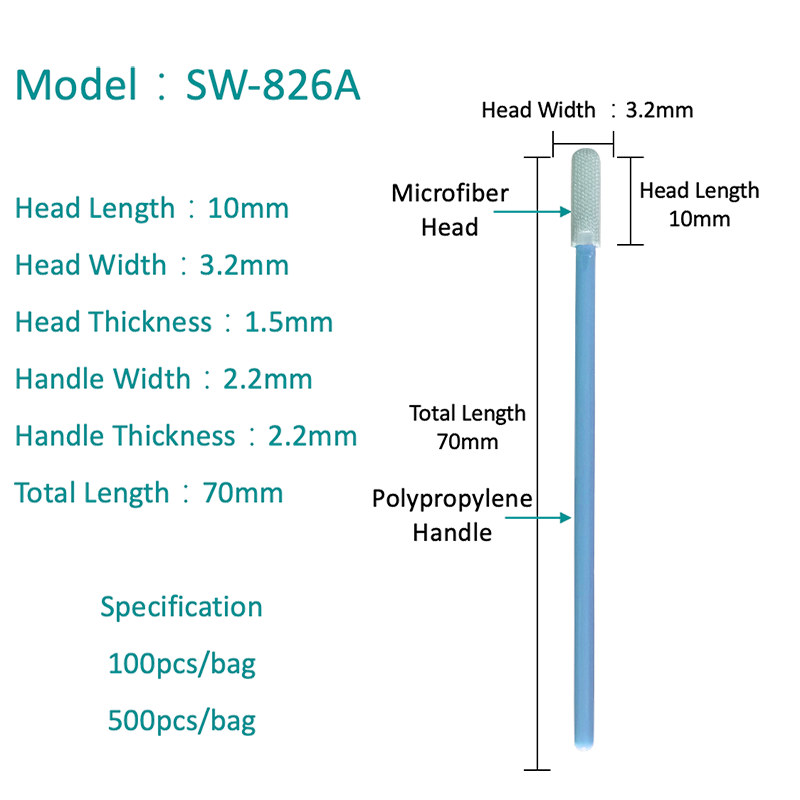
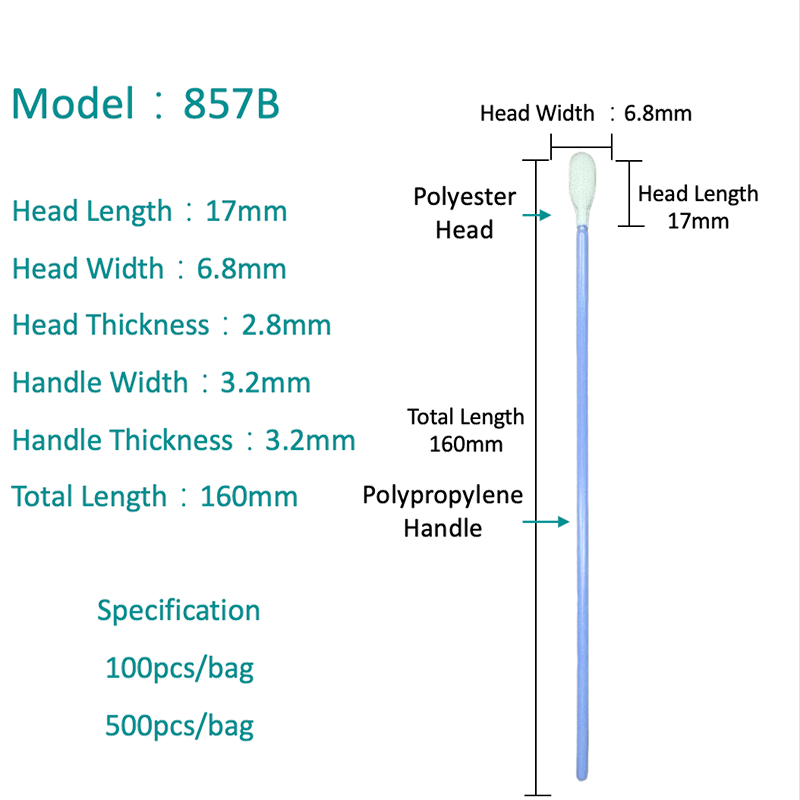
The manufacturing process allows for tight control over fiber diameter, tip density, and overall structure. Polyester fibers are non-absorbent; they hold liquids on their surface and in the interstitial spaces between fibers through capillary action and surface tension, but not within the fiber itself. This is a fundamental advantage. It means collected analytes remain more accessible at the surface, facilitating near-complete elution. The inert nature of polyester means it contains no organic inhibitors, making it highly compatible with DNA amplification techniques and other biochemical assays. The fibers can be bonded and treated to be **highly absorbent polyester swabs for solvent-based cleaning validation**, where the key is to rapidly pick up and then fully release residual solvents or APIs (Active Pharmaceutical Ingredients) for accurate quantification without interference.
Superior Performance in Critical Applications
The design of polyester swabs directly addresses the shortcomings of cotton. The controlled, low-shedding construction ensures minimal particulate contamination. The high recovery efficiency, often exceeding 90% for many analytes, provides quantitative accuracy. This makes them the de facto standard in regulated industries. For instance, in cleanroom monitoring, the use of **lint-free polyester swabs for cleanroom ISO standards** is often specified to prevent the swab itself from becoming a source of contamination. Their chemical inertness also makes them ideal for **polyester swab for corrosive surface sampling**, as they will not degrade or react with harsh chemicals (acids, alkalis, aggressive solvents) that might damage natural fibers, ensuring the sample's chemical integrity and the swab's physical integrity during collection.
Head-to-Head Comparison: Polyester vs. Cotton Across Key Metrics
The following table synthesizes the comparative performance of polyester and cotton swabs across the defined components of sampling accuracy. This direct comparison highlights why polyester has become the material of choice for high-stakes applications.
| Performance Metric | Polyester Swabs | Cotton Swabs |
|---|---|---|
| Collection Efficiency (Dry Surfaces) | High. Firm tip and tailored fiber loops can effectively dislodge particles. Smooth fibers allow easy release into eluent. | Moderate to High. Good for dry particles, but fibers can trap them, hindering later elution. |
| Collection Efficiency (Wet Surfaces) | Very High. Engineered for high capillary action and rapid fluid uptake without deep absorption. | High. Excellent initial absorbency, but liquid is drawn into fiber lumen. |
| Sample Retention & Low Shedding | Excellent. Fibers are bonded and tightly packed, minimizing loss during transport and preventing fiber shedding. | Poor. Prone to shedding lint and fibers, which can contaminate the sample and analytical equipment. |
| Elution / Recovery Efficiency | Very High (Often >90%). Non-absorbent fibers release collected analytes readily with proper elution technique (vortexing, centrifugation). | Low to Moderate (Often 30-70%). Analytes absorb into fibers and bind to cellulose, leading to significant sample loss during elution. |
| Analytical Interference (PCR, etc.) | Minimal to None. Synthetic, inert material contains no known PCR inhibitors or extractable chemicals that interfere with common assays. | High Risk. Natural pectins, oils, and dyes can inhibit enzymatic reactions like PCR, leading to false negatives. |
| Chemical Inertness / Compatibility | Excellent. Resistant to a wide range of acids, bases, and organic solvents. Ideal for harsh chemical sampling. | Poor. Susceptible to degradation by strong acids/bases. Organic solvents can extract natural compounds. |
| Consistency & Lot-to-Lot Uniformity | High. Synthetic manufacturing ensures precise control over fiber diameter, tip shape, and packing density. | Variable. Natural fiber variations can lead to differences in absorbency, shedding, and background contamination. |
| Best Suited For | Trace analysis, molecular biology (DNA/RNA), cleanroom monitoring, residual chemical testing, forensic evidence collection, corrosive material sampling. | General-purpose wiping, bulk liquid collection, non-critical visual inspections, direct plating in microbiology (with caution). |
The table clearly delineates a pattern: polyester swabs consistently outperform cotton in metrics critical for precise, quantitative analysis—namely recovery efficiency, lack of interference, and consistency. Cotton may perform initial collection adequately, but it acts as a reservoir that fails to release its contents, fundamentally compromising accuracy.
Selecting the Right Tool for Your Application
The choice between polyester and cotton should be a deliberate decision based on analytical goals, not habit. A systematic selection process ensures optimal accuracy.
Guiding Questions for Selection
- What is the primary analyte? (e.g., Microbial cells, DNA, metal ions, organic residues, particulates).
- What is the required sensitivity and quantification level? (Trace/ultra-trace analysis demands high-recovery, low-interference tools).
- What is the downstream analytical method? (PCR, culture, ICP-MS, HPLC, visual inspection).
- What is the nature of the sampling surface? (Smooth, rough, dry, wet, corrosive, delicate).
- Are there regulatory or standard guidelines to follow? (e.g., ISO cleanroom standards often specify low-shedding materials).
Application-Specific Recommendations
Based on the comparison, strong recommendations emerge:
For Molecular Biology (DNA/RNA Collection):
Polyester is unequivocally superior. The absence of PCR inhibitors and high nucleic acid recovery rate are paramount. This directly relates to searches for the **best swab for PCR inhibition testing**, where the swab itself must be validated to not contain inhibitors—a validation polyester swabs pass readily.
For Environmental & Cleanroom Monitoring:
Polyester swabs, specifically designed to be low-shedding polyester swabs for environmental monitoring and lint-free polyester swabs for cleanroom ISO standards, are essential. They collect contaminants without adding their own particulate background, which is critical for accurate particle counts and microbial monitoring in controlled environments.
For Industrial and Chemical Testing:
For tasks like cleaning validation in pharmaceutical manufacturing, highly absorbent polyester swabs for solvent-based cleaning validation provide the rapid uptake and near-total release needed to accurately measure residues down to very low levels. Similarly, for challenging surfaces, a polyester swab for corrosive surface sampling ensures both user safety and sample integrity, as the swab will not react with or be degraded by the sample.
For Trace Metal Analysis:
As noted, surface sampling for trace metal analysis requires a swab with minimal background elemental signature and no binding affinity for metal ions. Acid-washed polyester swabs are typically used, as cotton can have inherent metallic contaminants and a cellulose structure that may bind ions.
Maximizing Accuracy with Proper Swabbing Technique
Even the best swab can yield poor results if used incorrectly. Technique is integral to accuracy.
Universal Best Practices
- Pre-moistening: For dry surfaces or to enhance collection of microorganisms, pre-moistening the swab with a sterile, compatible buffer (e.g., saline, peptone water) is often crucial. This must be done uniformly without creating excess liquid that could spread the sample.
- Swabbing Pattern: Use systematic, overlapping strokes while rotating the swab to expose all sides of the tip to the surface. Apply consistent, firm pressure.
- Elution Protocol: Vigorous mechanical action (vortexing, vigorous shaking, or centrifugation) in an appropriate elution medium is necessary to overcome surface tension and release analytes from the swab fibers. Soaking alone is insufficient.
- Control Swabs: Always include control swabs (unused, processed through the same elution procedure) to identify any background contamination from the swab, packaging, or process.
Material-Specific Technique Notes
For polyester swabs, the elution step is highly efficient but requires ensuring the elution fluid thoroughly wets and interacts with the entire tip. For cotton swabs, more aggressive and prolonged elution methods may be attempted, but the inherent absorption limit remains a bottleneck that technique cannot fully overcome.
Making an Informed Decision for Precision Sampling
The evolution from cotton to polyester swabs mirrors the broader trend in analytical science toward greater sensitivity, reliability, and quantitative rigor. While cotton swabs retain a place for non-critical, bulk collection tasks, the evidence overwhelmingly supports polyester as the superior material for achieving high sampling accuracy. Its advantages in recovery efficiency, freedom from interference, consistency, and versatility across challenging applications—from DNA collection to cleanroom validation and corrosive sampling—make it the engineered solution for modern analytical challenges. By understanding the performance differentials outlined in this comparison and applying the correct selection criteria and technique, professionals can ensure that the first and most crucial step in their analytical process—sample collection—is built on a foundation of accuracy, thereby safeguarding the validity and value of all the steps that follow.

 ADDRESS
 CONTACT
 FAX
FAX EMAIL
EMAIL
